
Pre-Algebra Textbook PDF: A Comprehensive Guide (Updated 01/27/2026)
Pre-Algebra textbooks in PDF format bridge arithmetic and algebra, serving as essential resources for foundational math skills, often spanning 1299 pages.
What is Pre-Algebra?
Pre-Algebra is a crucial mathematical stepping stone, designed to build a firm foundation between basic arithmetic and the more abstract concepts of algebra. Often utilized in courses titled Basic Mathematics, Introductory Algebra, or Fundamentals of Algebra, it prepares students for higher-level math.
This course, and consequently a Pre-Algebra textbook (especially in convenient PDF format), focuses on developing skills in areas like integers, fractions, decimals, percentages, ratios, and proportions. It introduces early algebraic thinking, including variables, expressions, and simple equations.
Essentially, pre-algebra equips students with the necessary tools and confidence to successfully tackle the challenges of algebra and beyond, making a solid PDF textbook an invaluable resource.
The Role of a Pre-Algebra Textbook
A Pre-Algebra textbook, particularly in PDF format, serves as the primary guide for students navigating this critical mathematical transition. It systematically presents core concepts, provides illustrative examples, and offers practice exercises to reinforce learning. Beyond simply presenting information, a good textbook fosters understanding and problem-solving skills.
The textbook’s role extends to self-study, offering a readily accessible resource for independent learners. The PDF format enhances this, allowing for easy navigation, searching, and annotation. It’s a comprehensive tool for both classroom instruction and supplemental practice, ensuring students grasp foundational concepts before advancing.
Ultimately, the textbook empowers students to build confidence and achieve success in mathematics.
Why Choose a PDF Format?
Selecting a Pre-Algebra textbook in PDF format offers significant advantages. PDFs provide convenient, portable access to learning materials on various devices – computers, tablets, and smartphones – eliminating the need for physical books. This accessibility is crucial for students learning at home or on the go.
Furthermore, PDFs facilitate easy searching for specific topics and concepts, saving valuable study time. Annotation and highlighting tools within PDF readers enhance engagement and comprehension. The digital format also often represents a cost-effective alternative to traditional textbooks, with numerous free or reasonably priced options available.

PDFs are readily downloadable and offer a secure, final-sale option for long-term access.

Key Features of Pre-Algebra Textbooks
Pre-Algebra textbooks comprehensively cover foundational concepts, bridging arithmetic to algebra, offering both detailed and concise coverage for varied learning preferences.
Bridging the Gap: Arithmetic to Algebra
Pre-algebra textbooks are specifically designed to smoothly transition students from the concrete operations of arithmetic to the abstract thinking required in algebra. They accomplish this by systematically introducing algebraic concepts – variables, expressions, and equations – building upon a solid foundation of number sense and computational fluency.
These resources don’t simply jump into algebra; instead, they reinforce arithmetic skills while simultaneously laying the groundwork for future success. A quality pre-algebra PDF will include ample practice problems, real-world applications, and clear explanations to ensure students grasp these fundamental principles. This careful progression is vital for building confidence and preventing gaps in understanding, ultimately preparing students for more advanced mathematical studies.
Core Topics Covered
Pre-algebra textbooks, often available as comprehensive PDFs, systematically cover essential mathematical building blocks. Core topics typically include integers, fractions, decimals, percentages, ratios, and proportions – foundational arithmetic concepts revisited with increasing abstraction.
Furthermore, these texts introduce fundamental algebraic principles like variables, expressions, solving simple equations, and graphing on the coordinate plane. Students will also encounter concepts like exponents, square roots, and an introduction to geometry, including area and perimeter calculations. A robust PDF resource will present these topics with clear explanations, numerous examples, and practice exercises to solidify understanding and prepare students for algebra I.
Comprehensive vs. Concise Coverage
Pre-algebra textbooks in PDF format vary significantly in their scope. Comprehensive texts, potentially reaching 1299 pages, offer extensive explanations, numerous examples, and a wealth of practice problems, ideal for students needing substantial review or a slower pace. They often include supplementary materials and detailed answer keys.
Concise options, conversely, provide a streamlined approach, focusing on essential concepts and minimizing extraneous information. These are suitable for students with a strong arithmetic foundation or those seeking a quick refresher. Choosing between them depends on individual learning styles and prior knowledge; a PDF allows previewing content before purchase.
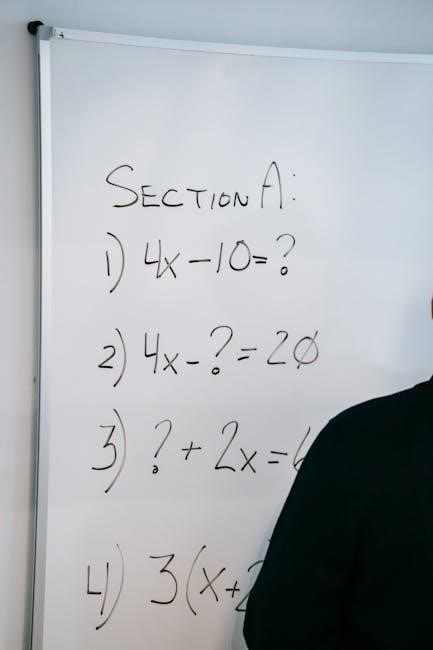
Finding Pre-Algebra Textbooks in PDF Format
Pre-algebra textbooks in PDF format are readily available through online resources, offering both free and paid options, but legality and copyright must be considered.
Online Resources for PDF Downloads
Locating pre-algebra textbooks in PDF format often begins with exploring various online platforms. Numerous websites specialize in offering educational materials, including downloadable PDFs. However, users should exercise caution and verify the legitimacy of the source to ensure they are accessing legally distributed content.
Some platforms provide free access to older editions or sample chapters, while others require a purchase or subscription for full textbook access. Educational institutions frequently offer digital textbooks through their learning management systems. Additionally, online bookstores and digital libraries can be valuable resources for finding pre-algebra PDFs. Always prioritize reputable sources to avoid potential security risks or copyright infringements when downloading.
Free vs. Paid PDF Options

The availability of pre-algebra textbooks in PDF format presents a spectrum of options, ranging from free resources to paid subscriptions. Free PDFs often include older editions, sample chapters, or materials from open educational resource initiatives. While cost-effective, these may lack the most current information or supplementary materials.
Paid options typically offer access to the latest editions, comprehensive content, and additional resources like practice worksheets and solution manuals. These are often available through online bookstores, publisher websites, or educational platforms. Consider your learning needs and budget when choosing; paid options generally provide a more complete and up-to-date learning experience.
Legality and Copyright Considerations
Downloading pre-algebra textbooks in PDF format necessitates careful attention to legality and copyright. Unauthorized distribution or downloading of copyrighted material is illegal and unethical. Always ensure you are obtaining PDFs from legitimate sources, such as publisher websites or authorized online retailers.
Many textbooks have specific licensing agreements; review these before downloading or using the PDF. Free PDFs may be legally available if they are offered by the publisher, are older editions in the public domain, or fall under fair use guidelines. Respecting copyright protects authors and ensures the continued availability of educational resources. Note that downloads are often final sale.

Popular Pre-Algebra Textbook Options (PDF Available)
Numerous pre-algebra textbooks are available in PDF format, offering detailed reviews, strengths, weaknesses, and suitability for self-study, aiding student learning effectively.
Textbook A: Detailed Review
Textbook A presents a comprehensive approach to pre-algebra, spanning approximately 1299 pages in its PDF format. It excels as a bridge between basic arithmetic and the fundamentals of algebra, making it suitable for introductory courses like Basic Mathematics or Fundamentals of Algebra.
This textbook offers concise yet thorough coverage of core pre-algebra topics. While downloads are final sale, pre-algebra extra practice worksheets are available as a supplemental PDF resource, providing additional support for students. It’s designed for both academic use – high school or college – and self-study, offering a fast review of essential concepts.
The textbook’s structure facilitates easy navigation, and its content is generally well-organized. However, users should be aware of the non-refundable download policy.
Textbook B: Strengths and Weaknesses
Textbook B, available as a PDF, positions itself as a versatile resource – suitable for formal coursework or independent study as a refresher. A key strength lies in its comprehensive, yet concise, coverage of typical beginning-level math and pre-algebra curriculum. It aims to solidify foundational skills before tackling algebra.
However, like Textbook A, downloads are final and non-refundable, a significant weakness for potential buyers unsure of its suitability. While offering a solid review, some users might find the pace too rapid without supplemental practice. The availability of extra practice worksheets, sold separately as a PDF, partially addresses this.
Accessibility is good, but reliance on a PDF format necessitates a compatible reader.
Textbook C: Best for Self-Study
Textbook C, in PDF format, excels as a self-study tool due to its clear explanations and structured approach. It’s designed for individuals needing a fast review or those preparing for standardized tests. The comprehensive coverage ensures all core pre-algebra concepts are addressed, mirroring a typical beginning-level course.
Its strength lies in enabling independent learning, though, like other PDF textbooks, it requires a compatible reader. While the core text is valuable, supplemental resources – such as the optional Pre-Algebra Extra Practice Worksheets – are highly recommended for reinforcing understanding.
BECU’s secure online banking access, available 24/7, mirrors this self-sufficiency, offering convenient financial management.

Utilizing Pre-Algebra PDF Textbooks Effectively
PDF textbooks offer convenient access, but maximizing learning requires utilizing search functions, annotation tools, and ensuring reader compatibility for optimal study.
Navigating a PDF Textbook
Successfully using a Pre-Algebra PDF textbook hinges on understanding its navigational features. Most PDF readers offer a table of contents, allowing quick jumps to specific chapters or sections. Utilize the bookmarking function to save frequently accessed pages for rapid return.
The page thumbnails view provides a visual overview of the document, enabling easy browsing. Mastering scrolling and zooming is crucial for comfortable reading on various devices. Remember that PDFs are designed to mimic physical books, so page turning is often intuitive.
Furthermore, explore the PDF reader’s tools for features like rotating pages or selecting text for copying. Efficient navigation transforms a lengthy PDF into a manageable and effective learning tool.
Using Search Functions for Specific Topics
A key advantage of Pre-Algebra PDF textbooks is the powerful search functionality. Instead of flipping through pages, instantly locate specific terms, concepts, or examples. Utilize keywords related to the topic you’re studying – for instance, “solving equations” or “fraction operations”.
Most PDF readers allow for case-sensitive or whole-word searches, refining results for greater accuracy. Explore advanced search options, such as searching within a specific page range.
This feature is invaluable when reviewing material or completing practice problems. Quickly finding definitions or worked examples accelerates learning and reinforces understanding. Mastering the search function unlocks the full potential of your PDF textbook.
Annotation and Highlighting Tools
Pre-Algebra PDF textbooks become truly interactive with annotation and highlighting tools. These features transform a static document into a dynamic learning environment. Highlight key definitions, formulas, or problem-solving steps for quick review. Add notes directly onto the page to clarify concepts or record personal insights.
Most PDF readers offer a variety of annotation options, including text boxes, sticky notes, and drawing tools.
Utilize different colors for highlighting to categorize information – for example, use yellow for important theorems and pink for challenging concepts. These tools promote active reading and deeper engagement with the material, enhancing comprehension and retention;

Supplemental Resources for Pre-Algebra Students
Pre-Algebra PDF study benefits from extra practice worksheets, online calculators, and support forums, enhancing understanding and problem-solving skills for students.
Extra Practice Worksheets (PDF)
Pre-Algebra Extra Practice Worksheets, available in PDF format, represent a valuable supplemental resource designed to reinforce concepts learned from the core textbook. These worksheets typically offer one dedicated practice sheet corresponding to nearly every lesson within a standard Pre-Algebra course.
This focused approach allows students to target specific areas where they may need additional support or wish to solidify their understanding. The PDF format ensures easy accessibility and printing, enabling convenient practice at home or in a classroom setting.
These resources are often considered optional but highly recommended for students aiming for mastery of pre-algebraic principles, providing ample opportunity for skill development and test preparation.
Online Calculators and Solvers
Complementing Pre-Algebra PDF textbooks, numerous online calculators and solvers offer students immediate feedback and assistance with problem-solving. These digital tools can handle a wide range of pre-algebraic calculations, from basic arithmetic operations to solving equations and simplifying expressions.
Utilizing these resources allows students to verify their answers, explore different approaches to problems, and gain a deeper understanding of the underlying mathematical concepts. Many platforms provide step-by-step solutions, fostering independent learning and critical thinking skills.
While not a replacement for mastering fundamental principles, online tools serve as valuable aids in reinforcing learning and building confidence.
Help Centers and Support Forums
Alongside Pre-Algebra PDF textbooks, accessing help centers and support forums proves invaluable for students encountering difficulties. Many educational platforms and textbook publishers offer dedicated support resources, often available 24/7, to address student queries and provide guidance.
These centers typically feature FAQs, tutorials, and direct access to instructors or tutors. Online forums foster a collaborative learning environment where students can connect with peers, share insights, and seek assistance with challenging concepts.
BECU’s Help Center exemplifies this, offering assistance day and night, mirroring the support needed for mastering pre-algebraic principles.

BECU Online Banking & Relevance (Contextual Information)
Like accessible Pre-Algebra PDFs, BECU’s online banking provides convenient, secure, at-home access to financial resources, mirroring ease of learning.
BECU’s Digital Banking Services
Similar to a comprehensive Pre-Algebra PDF offering readily available learning materials, BECU’s digital banking services provide members with 24/7 access to their accounts. This includes viewing balances, transferring funds between accounts, and applying for various loan products – mirroring the self-paced learning a PDF allows.
BECU also enables users to set up account alerts for monitoring transactions and manage finances efficiently. Just as a PDF textbook offers a concise review of mathematical concepts, BECU’s platform streamlines financial tasks. The convenience of “bank-at-home” access, coupled with robust security features, parallels the portability and security of a digitally accessible textbook.
Security Features of Online Banking
Analogous to protecting a valuable Pre-Algebra PDF from unauthorized access, BECU prioritizes online banking security. Robust measures are in place to safeguard member information and financial transactions, ensuring a secure digital environment. These features include secure login protocols, requiring a User ID and Password, and options for password recovery if forgotten.
BECU employs advanced encryption technologies to protect data transmitted online, similar to how PDF security settings can restrict editing or printing. The platform’s security infrastructure is continuously monitored and updated to defend against evolving cyber threats, mirroring the ongoing revisions in math textbooks to maintain accuracy.
Accessing BECU Services from Home
Just as a Pre-Algebra PDF provides convenient access to learning materials, BECU’s online and mobile banking platforms offer members bank-at-home convenience. View account balances, transfer funds, and apply for loans without visiting a branch – mirroring the self-paced learning a digital textbook enables.
BECU’s services are accessible 24/7, allowing members to manage finances at their convenience, similar to studying a PDF whenever and wherever. Setting up alerts for transactions provides proactive monitoring, akin to regularly reviewing practice problems in a textbook. This digital access streamlines financial tasks, offering efficiency and control, much like a well-organized PDF resource.

Troubleshooting Common PDF Issues
Like any digital resource, Pre-Algebra PDFs can encounter compatibility, download, or formatting problems; ensuring a suitable PDF reader is crucial for access.
PDF Reader Compatibility
Ensuring seamless access to your Pre-Algebra textbook PDF hinges on utilizing a compatible PDF reader. While most modern devices possess built-in readers, occasional issues may arise. Adobe Acrobat Reader remains the gold standard, offering robust functionality and broad compatibility. However, alternatives like Foxit Reader or even web browsers (Chrome, Firefox, Edge) can also effectively display PDFs.
If encountering display errors – such as distorted text, missing images, or inability to navigate – first update your PDF reader to the latest version. If problems persist, try opening the PDF with a different reader. Occasionally, a specific reader might struggle with a particular PDF’s formatting. Confirm your operating system meets the minimum requirements for the chosen reader, and consider reinstalling the software if necessary.
Download Errors and Solutions
Encountering download issues with your Pre-Algebra textbook PDF can be frustrating. Common problems include incomplete downloads, corrupted files, or slow connection speeds. First, verify your internet connection is stable. Pause and resume the download; sometimes, a temporary server issue is the culprit. Clear your browser’s cache and cookies, as these can interfere with downloads.
If the download repeatedly fails, try a different browser or download manager. Ensure sufficient storage space is available on your device. Note that downloads are often final sale, preventing refunds for corrupted files, so verifying integrity is crucial. If problems persist, contact the website’s support team for assistance, providing details about the error message received.
Printing and Formatting Problems
Printing a Pre-Algebra textbook PDF can sometimes lead to formatting issues. Pages may appear cut off, text could be distorted, or the print quality might be poor. Before printing, ensure your PDF reader’s settings are configured correctly. Select “Actual Size” or “Fit” in the print dialogue box to avoid scaling problems.
If issues persist, try printing a smaller section of the book at a time. Check your printer’s settings for paper size and orientation. Some PDFs are designed for specific paper sizes; adjusting these settings can resolve formatting errors. Consider using a different PDF reader, as compatibility varies. If the PDF is heavily formatted, converting it to a simpler format before printing might help.