
Missouri Real ID Application Form: A Comprehensive Guide (Updated February 27, 2026)
Important Notice: This guide provides information as of today, February 27, 2026, at 07:40:07. Due to evolving regulations, this article is archived and details may be outdated.
Navigating the Missouri Real ID process can be complex. This comprehensive guide aims to simplify the application, detailing requirements, necessary documentation, and the application process itself.
What is a Real ID?
Real ID is a national standard for state-issued driver’s licenses and identification cards. It was established as a result of the Real ID Act of 2005, passed by Congress following the 9/11 Commission’s recommendations. The core purpose of Real ID is to enhance security standards for identification documents used for federal purposes.
Specifically, beginning May 7, 2025 (though Missouri has been granted extensions), a Real ID-compliant driver’s license or identification card will be required for individuals age 18 and over to board domestic flights and access certain federal facilities. This includes entering federal buildings, nuclear power plants, and military bases.
Missouri, like all other states, is working to ensure its residents have the opportunity to obtain a Real ID-compliant credential. It’s important to understand that a standard Missouri driver’s license or non-driver ID will not be sufficient for these purposes after the enforcement date. The Missouri Department of Revenue (DOR) is actively facilitating the transition to Real ID compliance for its citizens.
Essentially, Real ID aims to create a more secure and standardized identification system across the United States, making travel and access to federal facilities more secure for everyone.
Federal Requirements and Missouri Compliance
The federal Real ID Act establishes minimum security standards for state-issued driver’s licenses and identification cards used for official purposes. These standards encompass stringent verification of identity, Social Security number, and proof of Missouri residency. The Department of Homeland Security (DHS) oversees state compliance with these federal mandates.
Missouri has been actively working towards full Real ID compliance, initially facing challenges and receiving extensions from the federal government. The state has implemented procedures to meet the required security protocols, including enhanced document verification processes and database checks.

Currently, Missouri offers both Real ID-compliant and non-compliant driver’s licenses and identification cards. Residents have the choice of which type of credential to obtain. However, as the May 7, 2025, enforcement date approaches, the importance of obtaining a Real ID-compliant card for air travel and federal facility access is increasing.
The Missouri Department of Revenue (DOR) continues to update its processes and provide resources to ensure residents can successfully navigate the Real ID application process and meet federal requirements. Staying informed about the latest updates from the DOR is crucial.
Why You Need a Real ID (or Alternative)
Beginning May 7, 2025, the federal government will require a Real ID-compliant driver’s license or another acceptable form of identification for domestic air travel within the United States. This means if you plan to fly domestically, you’ll need a Real ID or an alternative.
Beyond air travel, Real IDs will be required for accessing certain federal facilities, including military bases, federal courthouses, and other secure government buildings. This heightened security measure aims to strengthen national security protocols.
If you do not wish to obtain a Real ID, several alternatives will still be accepted. These include a valid U.S. passport, a U.S. military ID, a Permanent Resident Card, or a Trusted Traveler Program card (like Global Entry or NEXUS).
Missouri residents should assess their travel plans and access needs to determine if obtaining a Real ID is necessary. Even if not immediately required, having a Real ID can provide convenience and avoid potential issues in the future. Proactive preparation is key.
Missouri Real ID Application Eligibility
Generally, most Missouri residents are eligible to apply for a Real ID. To be eligible, you must be a U.S. citizen, a lawful permanent resident, or have temporary lawful status. Applicants must be able to prove their identity, Social Security number, and Missouri residency.

Individuals must be at least 18 years of age to apply for a Real ID. Those under 18 will need to meet specific requirements, often involving a parent or legal guardian’s presence and documentation. It’s crucial to verify the latest guidelines for minors on the Missouri Department of Revenue (DOR) website.
Applicants cannot already have a driver’s license or identification card from another state that is considered “non-compliant” with Real ID standards. Furthermore, individuals with certain restrictions on their driving privileges may be ineligible.
The Missouri DOR emphasizes that eligibility is determined on a case-by-case basis. It is recommended to review the complete eligibility criteria and required documentation list on the official DOR website before initiating the application process to ensure a smooth experience.
Required Documents: Proof of Identity
Establishing your identity is the foundational step in the Missouri Real ID application. The Missouri Department of Revenue (DOR) requires one original or certified copy of a document proving your identity. Photocopies are generally not accepted.
Acceptable documents include a U.S. birth certificate (issued by a vital records office), a valid U.S. passport or passport card, a Certificate of Citizenship, or a Certificate of Naturalization. Permanent Resident Cards (Green Cards) are also accepted for lawful permanent residents.
For those with previously issued driver’s licenses or identification cards, a valid, unexpired license from another U.S. state can sometimes be used, but it must meet specific security feature requirements. Tribal identification cards may also be accepted under certain conditions.
The DOR strongly advises checking their official website for the most up-to-date list of acceptable identity documents, as requirements can change. Ensuring you present a valid and accepted document will prevent delays in processing your Real ID application.
Acceptable Proof of Identity Documents
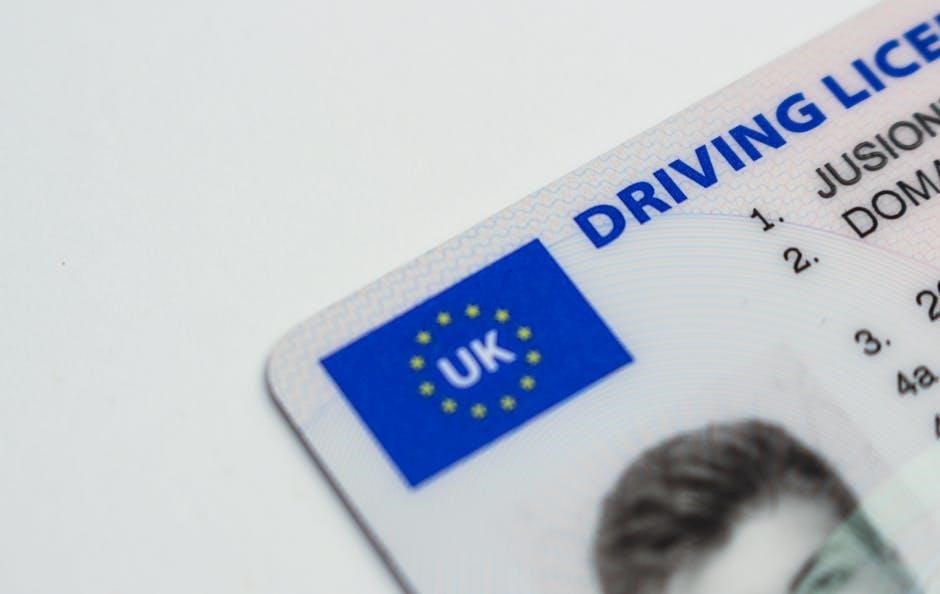
Here’s a detailed list of documents the Missouri Department of Revenue (DOR) currently accepts as proof of identity for Real ID applications (as of February 27, 2026). Remember to verify this list on the official DOR website for the latest updates.
- U.S. Birth Certificate: Original or certified copy issued by a vital records office.
- U.S. Passport/Passport Card: Valid, unexpired U.S. passport or passport card.
- Certificate of Citizenship: Original or certified copy.
- Certificate of Naturalization: Original or certified copy.
- Permanent Resident Card (Green Card): Valid, unexpired.
- Employment Authorization Document (EAD): Valid, unexpired (specific conditions apply).
- Foreign Passport: With a valid U.S. visa and I-94 form.
- Tribal Identification Card: Must meet specific DOR requirements.
Expired documents are not accepted. The DOR emphasizes presenting original documents or certified copies, not photocopies. Carefully review the DOR’s website for specific details regarding acceptable certifications and any potential exceptions to these requirements.
Required Documents: Proof of Social Security Number
Providing proof of your Social Security Number (SSN) is a mandatory step in the Missouri Real ID application process (updated February 27, 2026). The Missouri Department of Revenue (DOR) requires documentation verifying your SSN, but your actual Social Security card isn’t always necessary.
- Social Security Card: Original card is acceptable, but not required.
- W-2 Form: Displaying your name and full SSN.
- Pay Stub: Showing your name, SSN, and employer’s information.
- SSA-1099 Form: Showing your name and SSN.
- 1099-INT Form: Displaying your name and SSN.
- Official Documentation from the Social Security Administration: Such as a benefits statement.
The DOR stresses that the document presented must clearly display your full SSN. If your name on the document differs from your proof of identity, you’ll need to provide official documentation of the name change. Always check the DOR website for the most current list of acceptable documents and any specific requirements.
Acceptable Proof of Social Security Number Documents
As of February 27, 2026, the Missouri Department of Revenue (DOR) offers several options for verifying your Social Security Number (SSN) when applying for a Real ID. Presenting one of the following original documents (or a certified copy) will satisfy this requirement.
- Social Security Card: The original card, laminated or not, is a direct and commonly accepted form of proof.
- W-2 Form(s): Recent W-2 forms displaying your full SSN and name are acceptable.
- Pay Stubs: Pay stubs showing your name, SSN, and employer details are valid.
- SSA-1099 Form: Social Security Administration 1099 forms are also accepted.
- 1099-INT Form: Documents showing interest income with your SSN.
The DOR emphasizes that the document must be original or a certified copy. Photocopies are generally not accepted. If your current legal name differs from the name on the SSN documentation, you must also present legal documentation verifying the name change (marriage certificate, divorce decree, court order). Always consult the official Missouri DOR website for the most up-to-date list and any potential changes to accepted documentation.
Required Documents: Proof of Missouri Residency
Establishing Missouri residency is a crucial step in obtaining a Real ID. Applicants must provide two different documents demonstrating their current Missouri address. These documents must be original or certified copies; photocopies are typically not accepted by the Missouri Department of Revenue (DOR) as of February 27, 2026.
Acceptable documents fall into several categories, offering flexibility for applicants. Common examples include utility bills (gas, electric, water), bank statements, and official mail from government agencies. Lease agreements or mortgage statements are also valid options. Documents must be dated within the last 90 days to be considered current.
The DOR website provides a comprehensive list of acceptable residency documents. It’s important to note that PO Boxes are generally not accepted as proof of physical residency. Ensure the name and address on both documents match the information provided on your application. Reviewing the DOR’s guidelines before your visit will streamline the process.
Acceptable Proof of Missouri Residency Documents (Two Required)
To satisfy the Missouri Real ID residency requirement (as of February 27, 2026), applicants must present two documents from the approved list. Here’s a detailed overview of commonly accepted options:
- Utility Bills: Current gas, electric, water, or trash service bills.
- Bank Statements: Official bank statements mailed to your Missouri address.
- Government Mail: Correspondence from state or federal agencies (e.g;, IRS, Missouri DOR).
- Lease Agreement: A signed lease agreement for your Missouri residence.
- Mortgage Statement: A recent mortgage statement showing your Missouri property address.
- School Records: Official school enrollment or grade reports.
- Property Tax Bill: A current property tax bill for your Missouri residence.
Remember, documents must display your name and current Missouri address and be dated within the last 90 days. The Missouri DOR website maintains the most up-to-date and complete list of acceptable documents. Presenting two valid documents is essential for a successful Real ID application.
Completing the Missouri Real ID Application Form (Form 453)
The Missouri Real ID application, designated Form 453 (current as of February 27, 2026), requires careful completion. Begin by downloading the form from the Missouri Department of Revenue (DOR) website or obtaining a physical copy at a license office.
The form requests personal information including your full legal name, date of birth, Social Security number, and current Missouri address. Accuracy is paramount; discrepancies can cause delays. You’ll also be asked to declare your U.S. citizenship or lawful presence.
Pay close attention to the certification section, affirming the truthfulness of the provided information. Review the completed form thoroughly before signing and dating it. Ensure all fields are filled legibly.
Submitting a complete and accurate Form 453, alongside the required documentation, streamlines the Real ID application process. The DOR website offers detailed instructions and examples to assist applicants.
Where to Find the Form 453

Accessing the Missouri Real ID application form, Form 453 (updated February 27, 2026), is readily available through multiple channels. The primary and most convenient method is to download it directly from the official Missouri Department of Revenue (DOR) website. Navigate to the Real ID section for a downloadable PDF version.
Alternatively, physical copies of Form 453 are obtainable at all Missouri DOR license office locations statewide. A complete directory of these offices, including addresses and operating hours, is also available on the DOR website.
It’s advisable to download the most current version from the website to ensure you are using the latest form, as revisions may occur. Downloading allows you to begin completing the form at your convenience before visiting a license office.
Remember to verify the form number (453) and the revision date to confirm you have the correct document before proceeding with your Real ID application.
Online Application vs. In-Person Application

As of February 27, 2026, Missouri currently does not offer a fully online application process for Real IDs. While you can download Form 453 from the Missouri Department of Revenue (DOR) website and complete it digitally, the final step – submitting documentation and verification – requires an in-person visit to a designated license office.
The in-person application allows a DOR representative to verify your original documents, ensuring they meet the stringent Real ID requirements. This includes proof of identity, Social Security number, and Missouri residency;
Completing the form online beforehand significantly streamlines the in-person process, reducing wait times. However, be prepared to present the original documents and pay the applicable fee at the license office.
Essentially, the online component is a pre-application step, while the in-person visit is crucial for authentication and final processing of your Real ID application.

Missouri Department of Revenue License Office Locations
To complete your Missouri Real ID application, an in-person visit to a Missouri Department of Revenue (DOR) license office is mandatory. As of February 27, 2026, the DOR operates numerous offices across the state, though availability and hours can vary.
A comprehensive and up-to-date list of locations can be found on the official Missouri DOR website. The website features a convenient office locator tool, allowing you to search by city, county, or zip code. This tool also displays office hours, contact information, and any specific services offered at each location.
It is strongly recommended to check the website for any temporary closures or appointment requirements before visiting. Some offices may require or strongly encourage appointments to manage wait times effectively. Walk-ins are generally accepted, but expect potentially longer wait times.
Ensure you select a license office that processes Real IDs, as not all locations offer this service. The DOR website clearly indicates which offices are equipped to handle Real ID applications.

Real ID Application Fee Structure (as of 2026)
As of February 27, 2026, applying for a Missouri Real ID involves specific fees, distinct from standard driver’s license or identification card renewals. The standard fee for a Real ID compliant driver’s license is currently $45.00. For a non-driver identification card (Real ID compliant), the fee is $30.00.
These fees cover the administrative costs associated with verifying documentation and ensuring compliance with federal Real ID regulations. It’s important to note that these fees are subject to change by the Missouri Department of Revenue (DOR); Always verify the current fee schedule on the official DOR website before your visit.
If you are simultaneously renewing your existing driver’s license or ID card, you will pay the renewal fee in addition to the Real ID fee; The total cost will therefore be higher than a standard renewal. Discounts or waivers may be available for certain individuals; check the DOR website for eligibility criteria.
Be prepared to pay the applicable fee at the time of application.
Payment Methods Accepted

The Missouri Department of Revenue (DOR) offers several convenient payment methods for your Real ID application fee. Accepted forms of payment include cash, check, money order, and major credit/debit cards – specifically, Visa, Mastercard, Discover, and American Express. However, payment options can vary slightly depending on whether you apply in person or through the mail (if a mail-in option is available, which is currently limited).
When visiting a Missouri DOR license office, all listed payment methods are generally accepted. For checks and money orders, ensure they are payable to the “Missouri Department of Revenue.” When using a credit or debit card, be aware that a small processing fee may apply, depending on the card issuer and the transaction amount.
It’s advisable to confirm the accepted payment methods at your specific license office location before your visit, as policies can occasionally differ. The DOR website provides a comprehensive list of office locations and their accepted payment options. Online payments, if available, will have their own specified methods.
Processing Time for Real ID Applications
The processing time for Missouri Real ID applications can vary depending on several factors, including the application method (online versus in-person), the volume of applications received by the Department of Revenue, and the completeness and accuracy of your submitted documentation. As of February 27, 2026, applicants should anticipate a processing timeframe ranging from several weeks to potentially a couple of months.
In-person applications at a Missouri DOR license office generally experience faster processing times, as documents are verified immediately. However, the actual card issuance still requires backend processing. Online applications, if available, may take longer due to the need for document verification and mail delivery of the temporary ID.
Applicants are encouraged to check the Missouri DOR website for the most up-to-date processing time estimates. You can also track your application status online using the application reference number provided upon submission. Be patient, and avoid contacting the DOR unless the processing time significantly exceeds the estimated timeframe.
Temporary Real ID and Permanent Card Delivery
Upon successful verification of your application and supporting documents, the Missouri Department of Revenue (DOR) will issue a temporary Real ID. This temporary identification serves as proof that you have completed the application process and are awaiting your permanent card. The temporary ID is typically a printed document and is valid for a specified period, usually several months, as indicated on the document itself.
Your permanent Real ID card will be mailed to the address provided on your application. Standard delivery times apply, and it’s crucial to ensure the accuracy of your mailing address to avoid delays. As of February 27, 2026, expect the permanent card to arrive within 3-6 weeks after the temporary ID is issued.
If you haven’t received your permanent card within the expected timeframe, contact the Missouri DOR to inquire about its status. Keep your temporary ID readily available until you receive and can utilize your permanent Real ID card for federal identification purposes.

What if You Cannot Meet Real ID Requirements? (Alternatives)
If you are unable to fulfill the documentation requirements for a Missouri Real ID, or simply choose not to obtain one, you still have options for identification purposes, particularly for domestic air travel. A valid, unexpired U.S. passport remains a federally accepted form of identification. This is a reliable alternative, regardless of Real ID compliance.
Furthermore, other federally approved identification documents include U.S. military IDs, permanent resident cards, and Trusted Traveler Program cards (like Global Entry, NEXUS, SENTRI, and FAST). These alternatives will continue to be accepted at airport security checkpoints and federal facilities.
Missouri residents should note that a standard Missouri driver’s license or non-driver ID will not be sufficient for boarding domestic flights or accessing certain federal buildings after the enforcement date. Planning ahead and exploring these alternative options is crucial if obtaining a Real ID proves challenging.
Resources and Further Information (Missouri DOR Website)
The Missouri Department of Revenue (DOR) website is the primary and most reliable source for up-to-date information regarding Real ID requirements and the application process. You can find comprehensive details, downloadable forms, and frequently asked questions (FAQs) at dor.mo.gov. This online resource is continually updated to reflect any changes in federal or state regulations.
Specifically, the DOR website provides a dedicated section for Real ID, outlining accepted documents, office locations, and online application options (where available). Interactive checklists are also available to help you determine which documents you need to bring to your local license office.
For personalized assistance, the DOR offers a customer service hotline and email support. Links to these contact methods are prominently displayed on the website; Regularly checking dor.mo.gov ensures you have the latest guidance and can navigate the Missouri Real ID application process effectively. Don’t rely on third-party sources for critical information.