
Today, on 12/04/2025 at 20:44:12, the “Impossible Landscapes” PDF is gaining traction online, often linked to the “Mission: Impossible” franchise.
This digital document showcases visually paradoxical environments, mirroring themes of achieving the seemingly unachievable – “impossible is nothing” versus “nothing is impossible”.
The PDF’s popularity coincides with searches for downloads, including links on platforms like Baidu Netdisk, reflecting a broad interest in these intriguing, Escher-esque worlds.
What is the “Impossible Landscapes” PDF?
The “Impossible Landscapes” PDF is a curated collection of images and potentially accompanying text, centered around the visual representation of spaces that defy conventional geometric and physical laws. It’s a digital exploration of environments that, at first glance, appear logically sound, yet upon closer inspection, reveal inherent contradictions and impossibilities.
These landscapes often draw inspiration from the works of artists like M.C. Escher, known for his lithographs depicting impossible constructions. The PDF isn’t a single, definitive document; rather, it exists as various compilations circulating online, frequently appearing in discussions related to the “Mission: Impossible” films – a connection stemming from the franchise’s emphasis on overcoming seemingly insurmountable obstacles.
The core appeal lies in the cognitive dissonance these images create. They challenge our ingrained understanding of spatial relationships, prompting viewers to question their perception of reality. The PDF serves as a visual puzzle, a testament to the power of illusion, and a celebration of the creatively impossible. It’s a digital artifact reflecting a fascination with the boundaries of what can be visually conceived.
Origins and Authorship
Tracing the precise origins of the “Impossible Landscapes” PDF proves surprisingly elusive. It isn’t attributable to a single author or institution; instead, it evolved organically through online sharing and compilation. The initial impetus likely stemmed from communities fascinated by optical illusions, impossible geometry, and the artwork of M.C. Escher, whose influence is pervasive throughout the collection.
Early iterations likely circulated on image-sharing platforms and forums dedicated to art and design; The PDF format facilitated easy distribution and preservation of these visually striking images. The connection to the “Mission: Impossible” franchise, particularly with slogans like “impossible is nothing,” further fueled its spread, associating the landscapes with themes of achievable challenges.
While no definitive creator exists, numerous individuals have contributed to its growth by curating, sharing, and expanding the collection. The PDF represents a collaborative effort, a digital folk art born from shared aesthetic appreciation and a fascination with the boundaries of visual possibility. Its authorship is, therefore, distributed and anonymous.
The Core Concept: Escher-esque Worlds

At the heart of the “Impossible Landscapes” PDF lies the exploration of spatial paradoxes – environments that defy the laws of physics and challenge our perception of reality. These landscapes are deeply rooted in the artistic legacy of M.C. Escher, renowned for his lithographs depicting impossible constructions, infinite staircases, and distorted perspectives.

The PDF showcases scenes where gravity seems to operate inconsistently, architectural structures loop back on themselves, and perspectives shift in illogical ways. These aren’t merely random arrangements; they’re carefully constructed illusions designed to provoke cognitive dissonance and a sense of wonder. The concept taps into a fundamental human fascination with the unattainable and the paradoxical.

The “impossible” element isn’t about depicting something physically unreal, but rather presenting a logically inconsistent space. This aligns with the philosophical undercurrents of the collection, questioning the nature of perception and the limits of human understanding. The landscapes embody the idea that “nothing is impossible” within the realm of imagination and artistic representation.

Exploring the Visual Content
The “Impossible Landscapes” PDF presents a diverse collection of digitally rendered scenes, often evoking a sense of mystery and intrigue. These visuals frequently feature complex architectural designs and distorted realities.
The imagery draws inspiration from various artists and explores recurring themes of illusion, perception, and the boundaries of what’s possible.
Key Artists and Influences
The “Impossible Landscapes” PDF’s visual style demonstrably owes a significant debt to the pioneering work of M.C. Escher, whose lithographs and woodcuts masterfully depicted impossible constructions, tessellations, and explorations of infinity. His influence is readily apparent in the PDF’s recurring motifs of staircases leading nowhere and gravity-defying structures.
Beyond Escher, the aesthetic also resonates with the surrealist movement, particularly the dreamlike landscapes of artists like Salvador Dalí and René Magritte. The illogical juxtapositions and unsettling perspectives found within their paintings find a digital echo in the PDF’s impossible spaces.
Furthermore, the architectural paradoxes depicted suggest an influence from the De Stijl movement, with its emphasis on geometric abstraction and the interplay of planes. The clean lines and stark contrasts often seen in De Stijl architecture are subtly incorporated into the PDF’s impossible designs. The overall effect is a compelling blend of mathematical precision and artistic imagination, creating worlds that are both fascinating and disorienting.
Common Themes in the Landscapes
The “Impossible Landscapes” PDF consistently explores themes of perception, reality, and the limits of human understanding. A recurring motif is the manipulation of perspective, creating illusions that challenge our spatial reasoning. Staircases that loop back on themselves, buildings that defy gravity, and interconnected spaces that shouldn’t exist are commonplace.
Another prominent theme is the contrast between order and chaos. Many landscapes feature meticulously constructed architectural elements juxtaposed with seemingly random or illogical arrangements. This tension creates a sense of unease and invites viewers to question the underlying rules governing these worlds.
The concept of possibility, and its inverse – impossibility – is central to the PDF’s thematic core. The landscapes embody the idea that anything is conceivable, even if it’s physically unrealizable. This aligns with the advertising slogans “impossible is nothing” and “nothing is impossible,” suggesting a philosophical exploration of human potential and the power of imagination.
Architectural Paradoxes Depicted
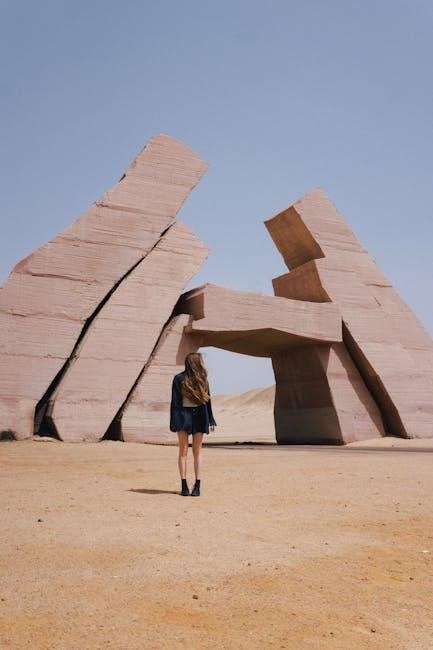
The “Impossible Landscapes” PDF is replete with architectural impossibilities, drawing heavily from the style of M.C. Escher. Penrose stairs, endlessly ascending or descending loops, are a frequent feature, defying the laws of physics and spatial consistency. Buildings often exhibit non-Euclidean geometry, with angles and dimensions that cannot exist in the real world.
Waterfalls flowing upwards, structures built on impossible foundations, and rooms with multiple perspectives simultaneously presented are common visual paradoxes. These designs challenge our ingrained understanding of architectural principles and create a sense of cognitive dissonance.
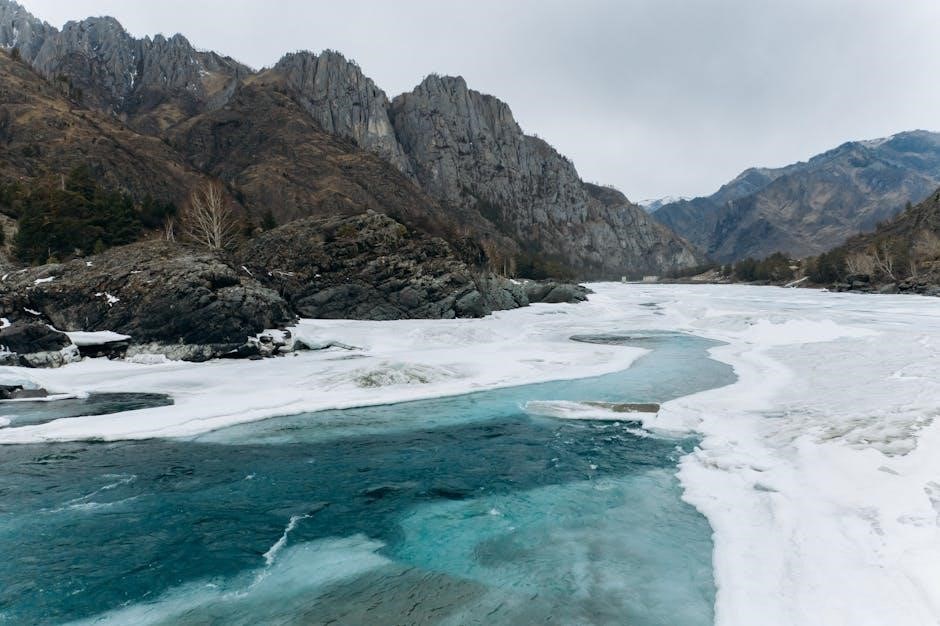
The landscapes frequently incorporate elements of both grandeur and fragility. Massive, imposing structures are often depicted with delicate, seemingly unstable components, highlighting the inherent contradictions within these impossible designs. This reflects a broader exploration of the tension between ambition and limitation, echoing the themes found within the “Mission: Impossible” franchise.
Technical Aspects of the PDF
The “Impossible Landscapes” PDF varies in file size depending on image density. Image resolution is generally high, enabling detailed viewing. Accessibility features are often absent, potentially causing issues for some users.
File Size and Format
The “Impossible Landscapes” PDF typically presents as a standard PDF/A document, ensuring long-term archival stability, though variations exist. File size is heavily dependent on the number of included images and their compression levels. Lower resolution previews might range from 5MB to 20MB, suitable for quick browsing and sharing. However, high-resolution versions, intended for detailed examination of the intricate landscapes, can easily exceed 100MB, sometimes even reaching several hundred megabytes.

The format generally prioritizes image fidelity over file size reduction, catering to the visual nature of the content. While some PDFs may employ optimized compression techniques like JPEG2000, others retain original image data for maximum quality. This impacts download times and storage requirements. The PDF structure itself is usually straightforward, utilizing embedded fonts for consistent rendering across different systems. Occasionally, complex PDFs with interactive elements or unusual features may require specific Adobe Acrobat versions for proper viewing.
Users encountering issues should verify their PDF reader is up-to-date. The prevalence of download links on platforms like Baidu Netdisk suggests a demand for the full-resolution versions, despite their larger file sizes.
Image Resolution and Quality
The “Impossible Landscapes” PDF distinguishes itself through a strong emphasis on visual detail, demanding high image resolution and quality. Most versions prioritize showcasing the intricate architectural paradoxes and Escher-esque designs with clarity. Resolutions typically range from 300 DPI to 600 DPI, ensuring sharp lines and textures even when zoomed in. Lower resolution versions, often found as previews, may suffer from pixelation and reduced detail.
Image quality is further enhanced by the use of lossless or minimally lossy compression formats. While JPEG compression is common, higher quality settings are employed to minimize artifacts. Some PDFs utilize PNG or TIFF formats for critical images, preserving maximum detail. The color depth is generally 24-bit, allowing for a wide range of colors and subtle gradients.
The demand for high-resolution downloads, as evidenced by searches on platforms like Baidu Netdisk, indicates a user base that values visual fidelity. This is crucial for appreciating the complex geometry and artistic skill inherent in these impossible landscapes.
Accessibility Features (if any)
Regarding the “Impossible Landscapes” PDF, accessibility features are, unfortunately, often limited or entirely absent. Many versions circulating online prioritize visual presentation over inclusivity, lacking crucial elements for users with disabilities. Text descriptions (alt text) for images are rarely included, hindering screen reader compatibility. This means visually impaired users struggle to understand the complex architectural paradoxes depicted.
Furthermore, the PDF structure frequently lacks proper tagging, making navigation difficult for assistive technologies. Optical Character Recognition (OCR) may not be applied to scanned images, rendering any embedded text unreadable by screen readers. Interactive elements, if present, are seldom designed with keyboard accessibility in mind.

The focus remains firmly on the visual experience, mirroring the inherent challenge of representing “impossible” spaces. While some creators may be mindful of accessibility, the widespread availability of visually-focused, non-compliant PDFs remains a significant concern. Improved versions are needed to broaden access to these intriguing landscapes.
Cultural Impact and Reception
The “Impossible Landscapes” PDF resonates with the “Mission: Impossible” ethos of defying limitations, fueled by slogans like “impossible is nothing.”
Its popularity reflects a fascination with paradoxical spaces and the philosophical question of possibility, inspiring online discussion and sharing.
Connection to the “Mission: Impossible” Franchise
The “Impossible Landscapes” PDF has experienced a surge in online interest, frequently appearing in searches alongside the “Mission: Impossible” film series. This connection isn’t accidental; the core concept of the PDF – visually impossible environments and defying logical constraints – directly mirrors the franchise’s central themes.
Ethan Hunt, the protagonist, consistently undertakes missions deemed “impossible,” showcasing ingenuity and skill to overcome seemingly insurmountable obstacles. The landscapes within the PDF visually represent these challenges, embodying the spirit of the films. The phrase “impossible is nothing,” a prominent Adidas slogan, also resonates with the franchise’s narrative, highlighting a mindset of relentless pursuit despite overwhelming odds.
Furthermore, online discussions often link the PDF to specific films like “Mission: Impossible II” (2000) and “Ghost Protocol” (2011), suggesting viewers find visual parallels between the depicted landscapes and the films’ elaborate set pieces and action sequences. The search for downloadable versions, including those hosted on platforms like Baidu Netdisk, further demonstrates this intertwined cultural reception.
The PDF, therefore, acts as a visual extension of the franchise’s core appeal.
Advertising Slogans: “Impossible is Nothing” vs. “Nothing is Impossible”
The “Impossible Landscapes” PDF’s popularity is inextricably linked to the contrasting advertising slogans: “Impossible is Nothing” (Adidas) and “Nothing is Impossible” (Li-Ning). These phrases encapsulate differing perspectives on overcoming challenges, mirroring the visual paradoxes presented within the PDF’s landscapes.
“Impossible is Nothing” suggests a confident dismissal of limitations, a mindset where perceived impossibility holds no sway. This aligns with the PDF’s depiction of environments that defy logic, yet exist visually. Conversely, “Nothing is Impossible” emphasizes inherent potential, believing all things are achievable with effort. This resonates with the spirit of exploration and problem-solving evoked by the landscapes.
The debate surrounding these slogans – whether one embodies self-assurance while the other champions possibility – mirrors the interpretations of the PDF’s imagery. Both slogans, however, tap into the human desire to transcend boundaries, a theme central to the “Mission: Impossible” franchise and the PDF’s visual appeal. The PDF, in essence, visualizes these philosophical stances.
The slogans’ prominence in online discussions surrounding the PDF highlights their cultural relevance.
The Philosophy Behind Impossible Spaces
The “Impossible Landscapes” PDF delves into a fascinating philosophical realm, exploring the human fascination with spaces that defy Euclidean geometry and logical construction. These landscapes aren’t merely visual tricks; they challenge our fundamental understanding of reality and perception.
The appeal lies in the cognitive dissonance they create – our brains attempt to reconcile the impossible with established spatial rules. This struggle sparks curiosity and invites contemplation on the nature of existence, possibility, and the limits of human comprehension. The landscapes, therefore, become metaphors for overcoming seemingly insurmountable obstacles, echoing the “impossible is nothing” ethos.
Furthermore, these spaces can be interpreted as representations of the subconscious mind, where logic often bends and surreal imagery prevails. They mirror dreamscapes, offering a glimpse into the boundless creativity and irrationality of the human psyche. The PDF’s popularity suggests a collective yearning to explore these uncharted territories of thought and imagination, pushing the boundaries of what we consider ‘real’.
Ultimately, the landscapes invite us to question our assumptions about the world around us.
Troubleshooting PDF Issues
If encountering errors like “Your request has bad syntax,” try clearing your browser’s cache and cookies. As of 12/04/2025, issues may arise when accessing download links, like those on Baidu Netdisk.
Ensure a stable internet connection for seamless PDF viewing and downloading.
“Your request has bad syntax or is inherently impossible to satisfy” Errors
Encountering the frustrating message “Your request has bad syntax or is inherently impossible to satisfy” while attempting to access the “Impossible Landscapes” PDF is, unfortunately, a common issue. This error frequently surfaces when utilizing certain platforms, particularly those associated with online activities and downloads, as noted on May 11, 2024.
Specifically, users have reported this problem while navigating Tencent gaming activity pages. The root cause often lies within the browser itself. A buildup of cached data and cookies can interfere with the proper processing of requests, leading to this cryptic error message. To resolve this, a thorough clearing of your browser’s cache and cookies is the first and most effective troubleshooting step.
For users of 360 Browser, accessing the settings and selecting a full cleanup of cached files is recommended. Similarly, Baidu Browser users should follow a comparable procedure. Beyond browser maintenance, verifying a stable internet connection is crucial. Intermittent connectivity can also trigger this error. If the problem persists, consider temporarily disabling browser extensions, as they may occasionally conflict with website functionality.
Clearing Browser Cache and Cookies
When facing difficulties downloading or viewing the “Impossible Landscapes” PDF, particularly encountering errors like “Your request has bad syntax…”, clearing your browser’s cache and cookies is a vital first step. As highlighted on May 11, 2024, this simple procedure resolves a significant number of access issues.
Cached data stores temporary files from websites, speeding up future visits but potentially causing conflicts with updated content. Cookies, while useful for remembering login details, can also become corrupted or outdated. Removing these allows the browser to fetch the freshest version of the PDF and its associated resources.
The process varies slightly depending on your browser; In most browsers (Chrome, Firefox, Edge), you’ll find the option within the settings menu, usually under “Privacy” or “History”. Select the option to clear browsing data, ensuring both “Cached images and files” and “Cookies and other site data” are checked. Be aware this will log you out of most websites. After clearing, restart your browser and attempt to access the “Impossible Landscapes” PDF again.
Finding Download Links (e.g., Baidu Netdisk)
Locating the “Impossible Landscapes” PDF often leads users to search for direct download links, with Baidu Netdisk (Baidu Yun) frequently appearing in search results, as noted on April 10, 2025. This Chinese cloud storage service is a common repository for shared files, but accessing content can present challenges for non-Chinese speakers.
Search queries like “2 Mission: Impossible II (2000)” (translated: “Mission: Impossible II full set unedited HD Baidu Netdisk free download link”) demonstrate the demand. However, be cautious of potentially misleading or malicious links. Always verify the source before downloading.
Baidu Netdisk often requires a Baidu account for downloads. Translation tools can assist in navigating the website if you don’t read Chinese. Furthermore, download speeds may be limited for non-premium accounts. Exercise caution regarding copyright and ensure you are downloading legally obtained content. Alternative sources and official websites, if available, are always preferable to avoid security risks.